In this edition of PMCV Insights we will be continuing our journey of exploring the history of PMCV in commemoration of our 25th anniversary. We had the incredible opportunity to hear from several individuals that had a significant role in the establishment of PMCV.
If you missed our previous LinkedIn snapshot about where we came from, you can read it here:
Following a recommendation from the Medical Training Review Panel in 1999 to create Postgraduate Medical Council’s (PMC’s) in the states that did not yet have them, PMCV was established in 2000. Upon our founding, PMCV appointed a small team, and a Board which consisted of Deans of the Victorian Medical schools, – Melbourne University and Monash University – a Department of Health Representative and a representative from the Medical Practitioners Board of Victoria, Dr Joanna Flynn. This Board was chaired by Professor Napier (Nip) Thomson.
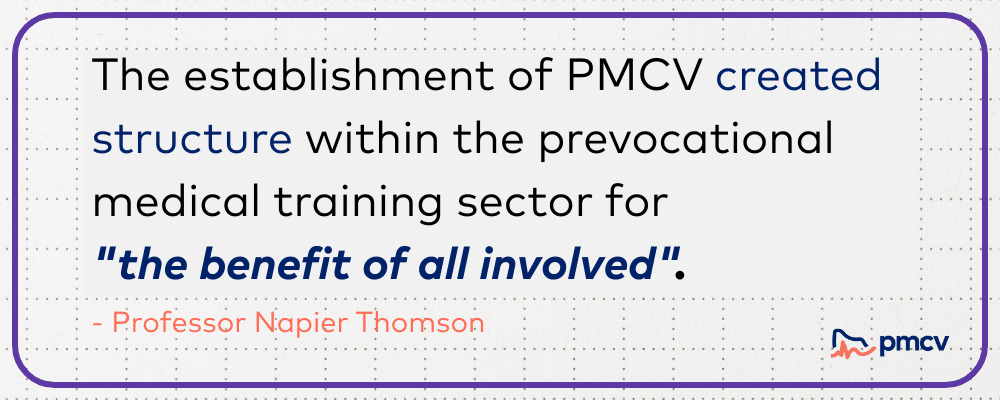
As the Board met quite infrequently to begin with, most of the PMCV’s work was conducted by a body deemed ‘The Committee’ which was chaired by Professor Barry McGrath who made significant contributions during the establishment of PMCV, particularly in developing support for International Medical Graduates (IMGs) working in Victorian hospitals.
At this time, Carol Jordan was appointed as PMCV’s first Executive Officer and worked closely with Barry. Carol notes that once she took on the role there was a “complicating factor” of a state election. This made it difficult to know who to contact at the Department of Health about the set-up and funding arrangements for the organisation. She went on to explain that it probably took “seven to eight months trying to [engage with] the right stakeholders”.
During the first 15 years as an organisation, PMCV offices were located in the now demolished Mary Aitkenhead Centre at St Vincent’s Hospital in Melbourne. Carol believed that this location worked well at the time as it “was in close proximity to key Board members”. It also provided economic advantages as we navigated the early challenges of forming an organisation.
Computer Matching was the primary role of the organisation when it was founded following the transition of the processes from the Victorian Medical Postgraduate Foundation (VMPF). The Match process was “totally focused on prevocational doctors and done with very bespoke software that relied on one person”, former Board Chair Professor Jonathan Knott described. There were some Matches that covered other areas of healthcare such as radiology and nursing which the VMPF passed on to PMCV.
Throughout the early years, PMCV experienced its fair share of successes as well as challenges. One of the major barriers to success according to Carol was a lack of “people’s knowledge of the organisation, what we did and the significance of it.”
Former Board and ‘Committee’ Chair Professor Brendan Crotty agreed that this was a challenge – “communicating with the right people in the health services and the department, the decision makers” was often a difficult feat. However, he emphasised that there were “lots of highlights” during his time with the organisation.
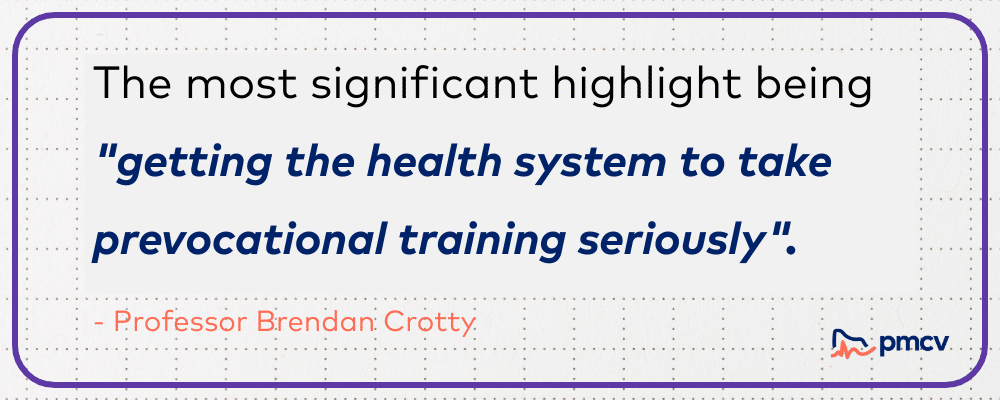
This was driven by several factors including a Department of Health mandate that forced a restructure to the current PMCV governance arrangement in 2011 – a more formalised Board that met on a quarterly basis.
In addition to funding received from the Victorian Department of Health to undertake additional functions such as Accreditation and Education Programs. PMCV took over Accreditation of Victorian intern positions immediately following our founding from the Intern Training Accreditation Committee (ITAC) of the Medical Practitioners Board of Victoria (MPBV). Dr Eleanor Flynn became the Chair of the PMCV Accreditation Committee. She led the development of the Victorian Intern Accreditation standards (replaced by the AMC’s national standards in 2012). Eleanor also had a heavy role in drafting and trailblazing the accreditation standards for PGY2 positions. This process was voluntary at first but eventually PMCV was required by the Department of Health to quality review PGY2 programs and posts.
PMCV’s role as a prevocational Accreditation body became much more rigorous after the Australian Medical Council took on national oversight of prevocational training which results in the publication of the first National Framework in 2012. Jonathan acknowledged the significance of the Accreditation function as it demonstrated that PMCV had the reputation and knowledge to “…decide whether those [prevocational doctor] roles [were] safe, appropriate and effective”.
Initially, according to Jonathan, the Accreditation process required a “great deal of volunteer support from a wide range of individuals”. However, over time, it has ultimately been acknowledged as a successful program by both PMCV and the health services involved.
The development of the Education and Training function, now known as Advocacy and Wellbeing, involved the introduction of an Education Committee to assist in developing welfare initiatives for prevocational doctors and, according to Brendan, “providing some education for PGY1s and later PGY2s”. This was greatly facilitated by Department of Health funding for Medical Education Officers (MEOs) at Victorian hospitals and the subsequent appointment of a Central MEO at PMCV.
Jonathan noted the “substantial” impact these efforts have had.
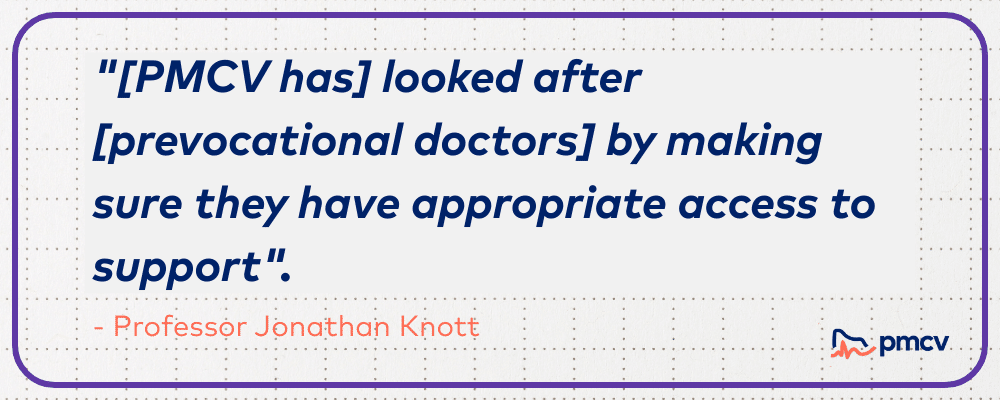
In addition to providing “a space [for prevocational doctors] to have some control over what happens” within their prevocational training journey.
All core functions of PMCV could not have been successful if it weren’t for the people involved. Brendan exclaimed that, “the staff were fantastic all the way through…we’ve had really dedicated, committed, thoughtful and really pleasant staff to work with.”
Former VMPF Executive Director Ann Mansie (formerly Ann Dancer) praised the Board in particular, “I thought very highly of the Board. I always thought that the Board had extremely good representation for direction and advice”. Jonathan agreed that “in the early days there were precious few staff… doing some great work.” He also applied this sentiment to the broader prevocational education and training community who have worked and continue to work with PMCV.
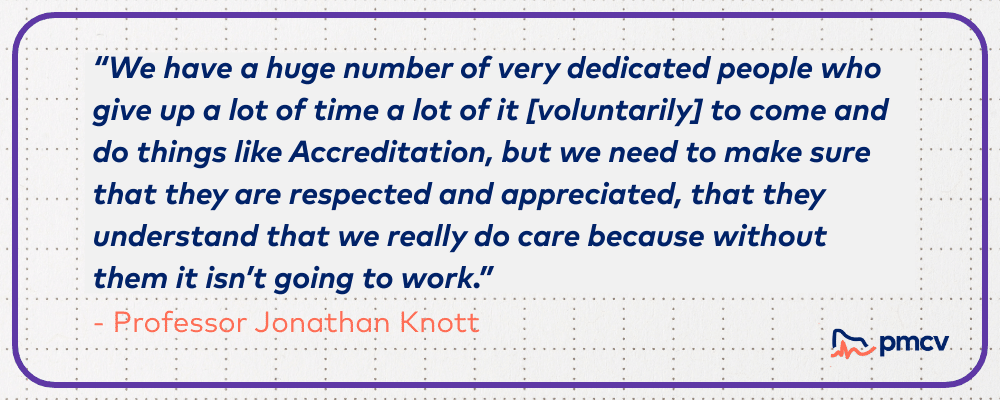
It is evident that the establishment and early years of PMCV were hugely impactful and created the steppingstones for the organisation to progress to where we are today.
Stay tuned for future blogs, for more detail on our successes throughout the years and what the future holds for PMCV.
PMCV would like to sincerely thank Ann Mansie, Professor Napier (Nip) Thomson, Carol Jordon, Professor Brendan Crotty and Professor Jonathan Knott for their contributions to this edition.