On Friday the 28th of June 2024, PMCV held our annual Symposium at the Angliss Conference Centre. This year’s theme was ‘Journey Towards Cultural Safety in Prevocational Medical Training’ which focussed on approaches to building and maintaining a culturally safe environment for Aboriginal and Torres Strait Islander health professionals and patients in health services.
To commence our proceedings, we had a Welcome to Country and smoking ceremony delivered by Wurundjeri Elder Perry Wandin.
This was followed by our first keynote speech from Jacqueline Gibson. Jacqueline serves as a Commissioner of the Mental Health and Wellbeing Commission and is deeply committed to reconciliation and addressing the unique challenges faced by First Nations people, including inadequete service, injustice, trauma, and discrimination. Jacqueline was the first Indigenous Mental Health Tribunal member in Victoria and part of changing the legislation to include cultural safety in the national health law.
Jacqueline spoke of her expertise within the field and the new chapter of national standards for prevocational training that we find ourselves in. She emphasised that it is a chapter that “demands introspection, respect and above all a commitment to cultural safety that is not merely a procedure but about the soul of our healthcare system and how it treats First Nations people”.
“Cultural Safety is more than an initiative it is an ethical imperative that shifts our approach from offering services regardless of difference to one that embraces and respects individual needs of Aboriginal and Torres Strait Islanders.”
Jacqueline added that it is about being enabled, challenging racism, self-determination, expecting effective quality care and “embarking on an ongoing process of self-reflection and cultural self-awareness to understand how our biases and prejudice shape our interaction and service delivery.
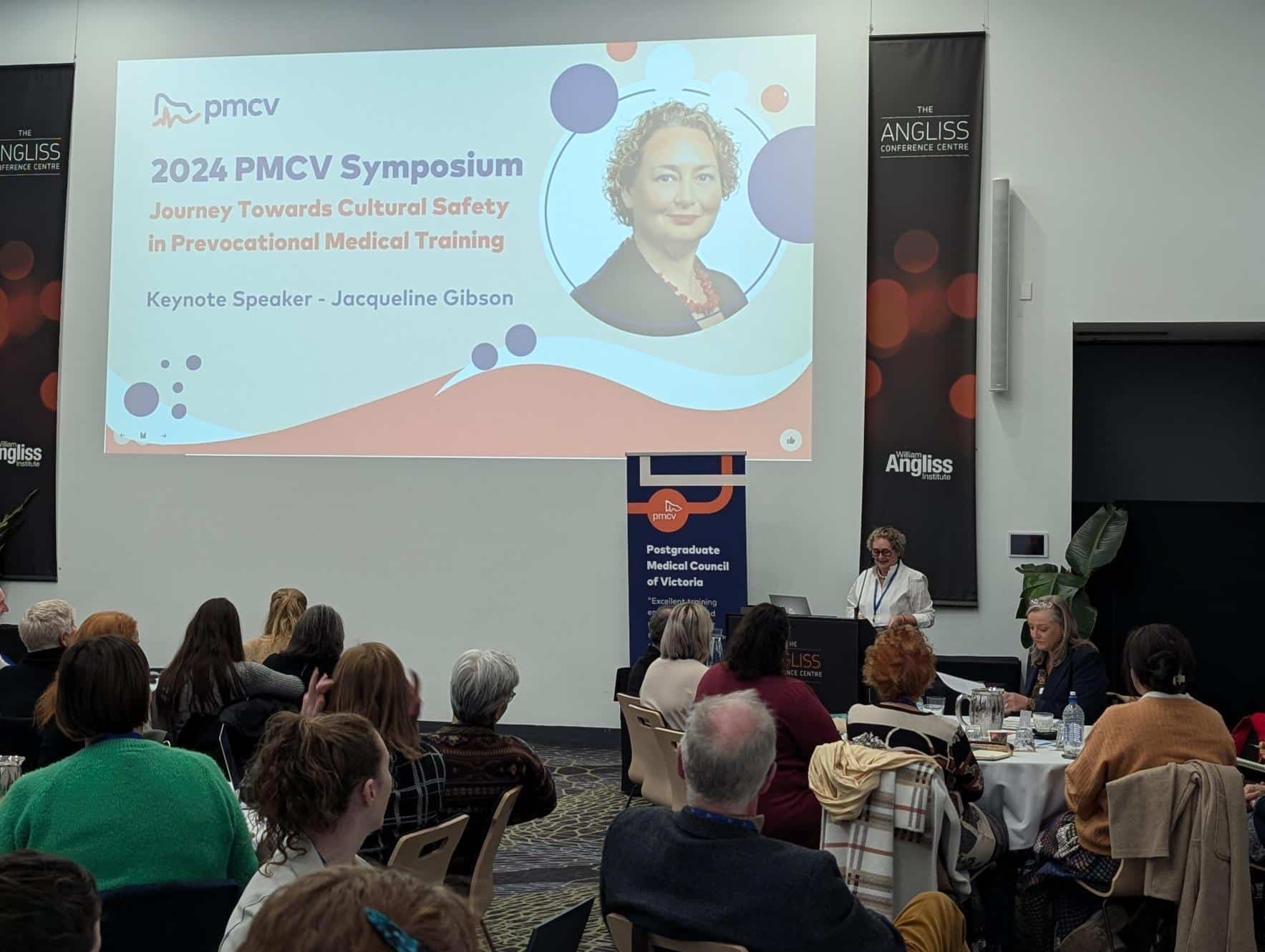
Keynote speaker Jacqueline Gibson speaking about the new and amended cultural safety accreditation standards and what that means for the industry.
Jacqueline also outlined significant areas of the new and amended prevocational medical training standards of which she had a hand in developing and related them to already existing standards across the industry.
“…cultural safety is not a destination but a journey of continuous improvement and learning as we implement these standards, and we take a crucial step towards a more inclusive and just healthcare system.”
You can watch Jacqueline’s full keynote below:
Our second keynote speech was presented by Dr Glenn Harrison, a proud Wotjobaluk man from the Wimmera districts of Victoria and an esteemed Emergency Specialist who currently practices at both the Royal Melbourne and Epworth hospitals. Glenn is fervently dedicated to the development of First Nations medical specialists and coordinates an Indigenous Internship program at the Royal Melbourne Hospital, and holds several significant positions, including Board Director of the Australian Indigenous Doctors Association.
He opened his keynote by noting that no one is an expert in cultural safety as you can’t take the principles of cultural safety that are applicable in one state or territory to another as the language, practices and culture is very different.
There are “opportunities to provide cultural safety or at least think about cultural safety in healthcare at every step of the way from paediatrics to age care services”.
He suggested that the journey can start off by simply learning about your country and culture to enrich your learning and engagement with your community. Then progressing towards asking questions about other facets of cultural safety such as determining whether it is being practiced and how it is being measured.
He also outlined aspects to consider implementing in health services that work towards cultural safety such as developing and implementing an anti-racism policy and Reconciliation Action Plan (RAP), in addition to growing the capacity of staff capable of providing quality care for Aboriginal and Torres Strait Islander patients.
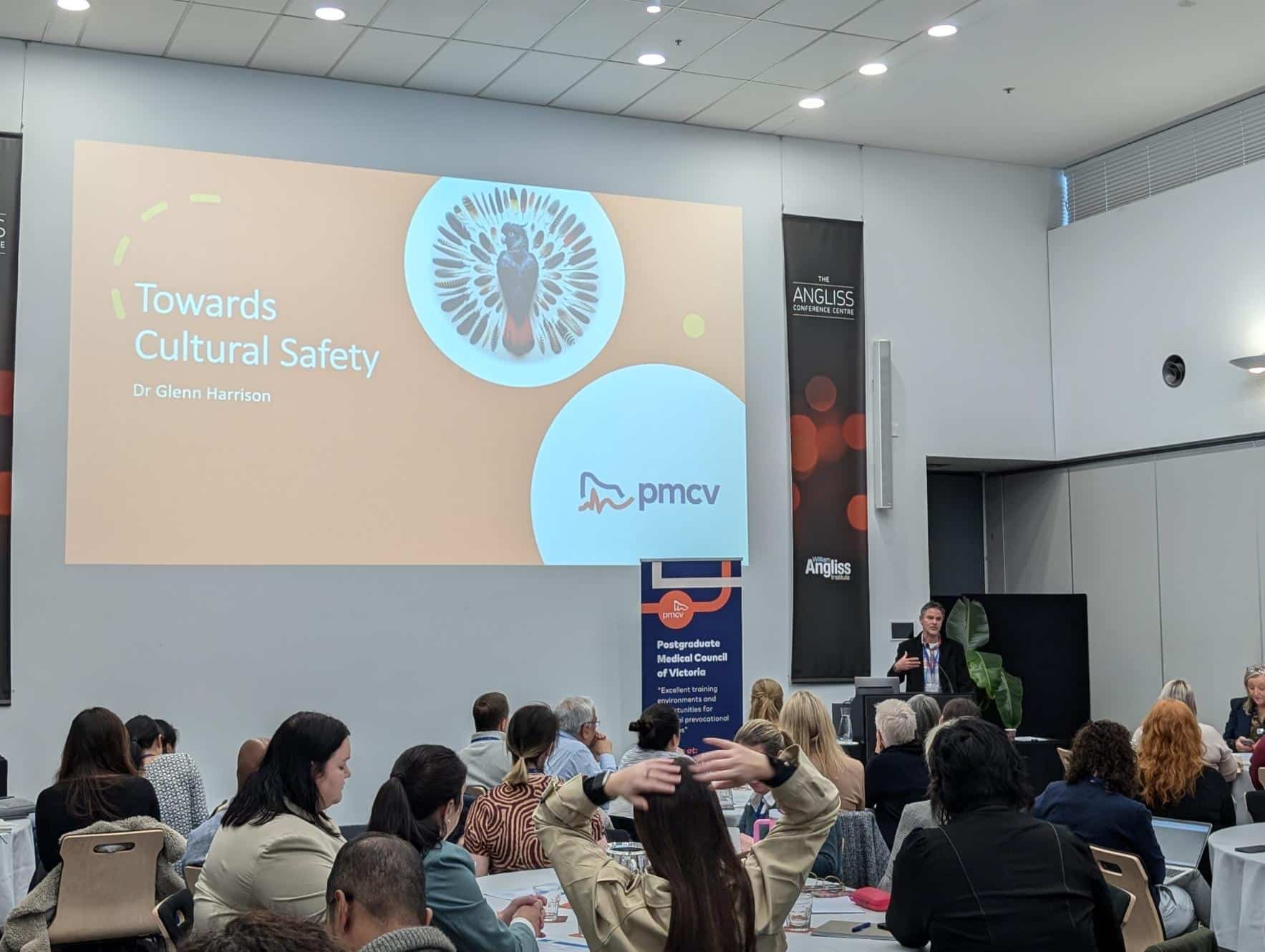
Dr Glenn Harrison sharing his suggestions for starting the journey towards cultural safety.
He added that to support the idea of it being a “journey”, health services should move away from mandatory cultural safety training that can feel like a “burden” to staff and instead have different varieties and types.
He concluded by discussing the need to incorporate it into accreditation and create a pathway for Aboriginal and Torres Strait Islander medical professionals to be welcomed and stay in the industry.
You can watch Glenn’s full keynote below:
Following our keynotes, attendees participated in a Yarn Circle facilitated by Dr Glenn Harrison and Echuca Regional Health’s Aboriginal Liaison Officer, Gilbert Wanganeen. During the Yarn Circle they addressed the question, “what does cultural safety mean to me as a medical professional?”.
In the afternoon, Julie Hatty, PMCV CEO, and Dr Sarah Rickman, PMCV Medical Director, facilitated a ‘Cultural Safety in Prevocational Training’ workshop, During the workshop, attendees discussed approaches to cultural safety within the key themes of updated AMC Accreditation Standards such as recruitment, supervision, and education and orientation programs.
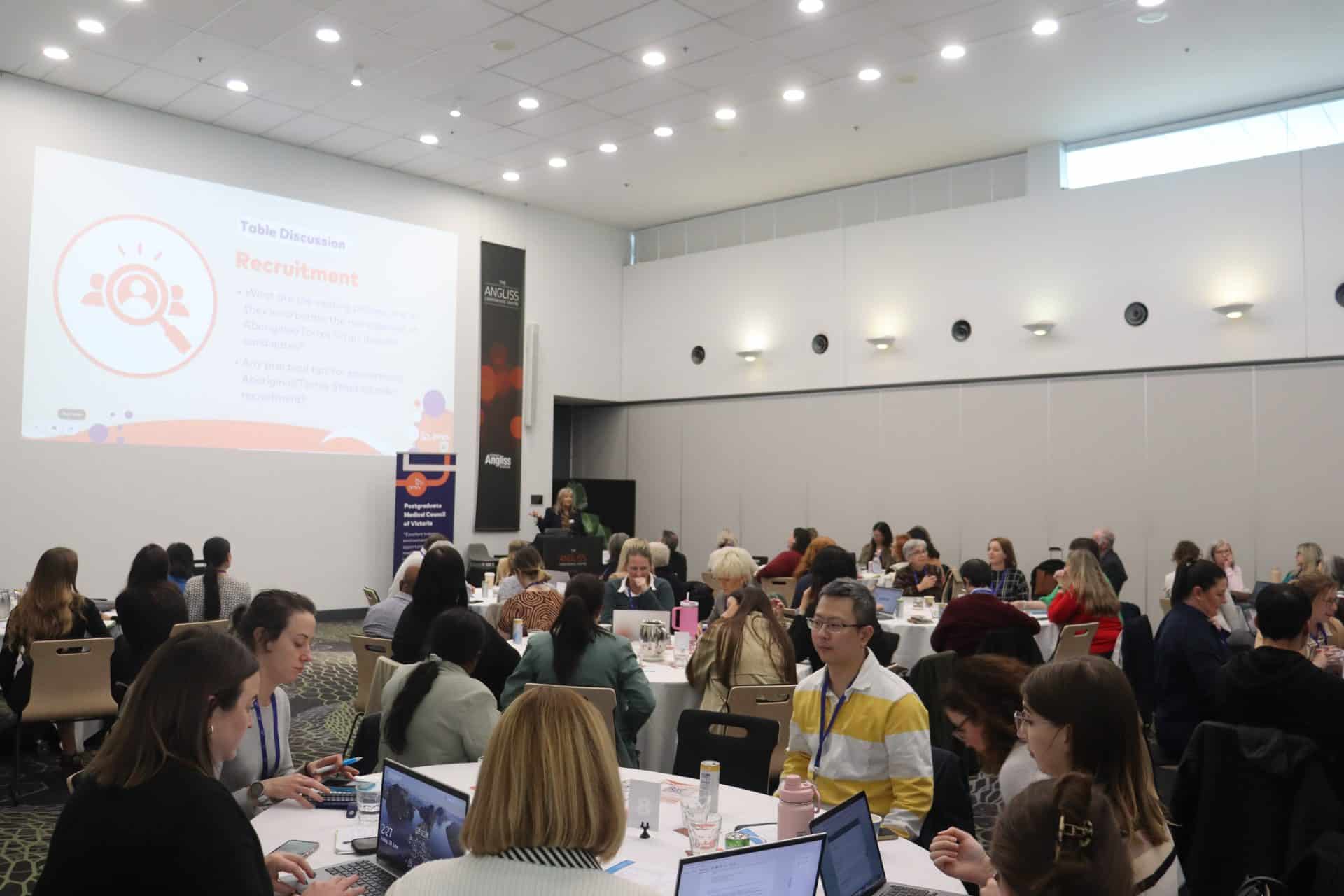
PMCV CEO Julie Hatty facilitating the ‘Cultural Safety in Prevocational Medical Training’ workshop.
Throughout the workshop several Victorian health services showcased their initiatives and efforts to create a culturally safe environment at their health service. For example, dual naming of buildings, displaying Aboriginal and Torres Strait Islander artwork, heavy involvement of the Aboriginal Liaison Officer, etc. PMCV would like to thank Austin Health, Mildura Base Public Hospital and Monash Health for their contributions to the successful symposium.
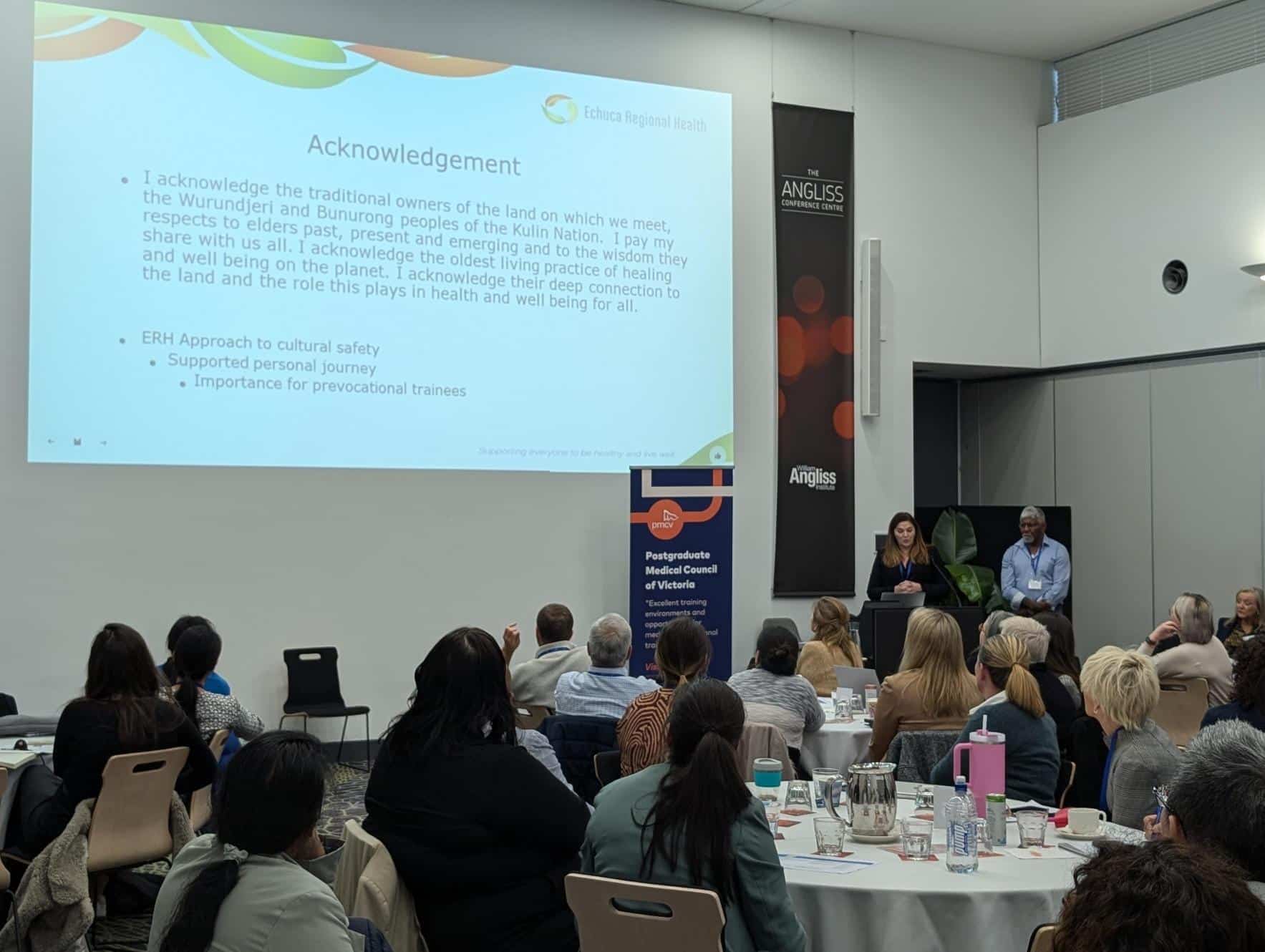
Echuca Regional Health presenting during the ‘Cultural Safety in Prevocational Medical Training’ workshop.
After collating findings from the workshop, PMCV will be creating a resource that will be designed to support your efforts in creating an increasingly culturally safe environment at your health service that meets the AMCs accreditation standards.
Thank you to everyone who attended the 2024 Symposium.