For Prevocational (PGY1 and PGY2) Medical Training
Accreditation of PGY1 and PGY2 posts has been a core responsibility of PMCV since the foundation of the organisation. This has extended further through the implementation of the revised National Framework over the last two years.
In this edition of PMCV Insights, we had the exciting opportunity to discuss the development and impact of PMCV’s Accreditation processes with individuals who have had substantial involvement in and knowledge of these functions.
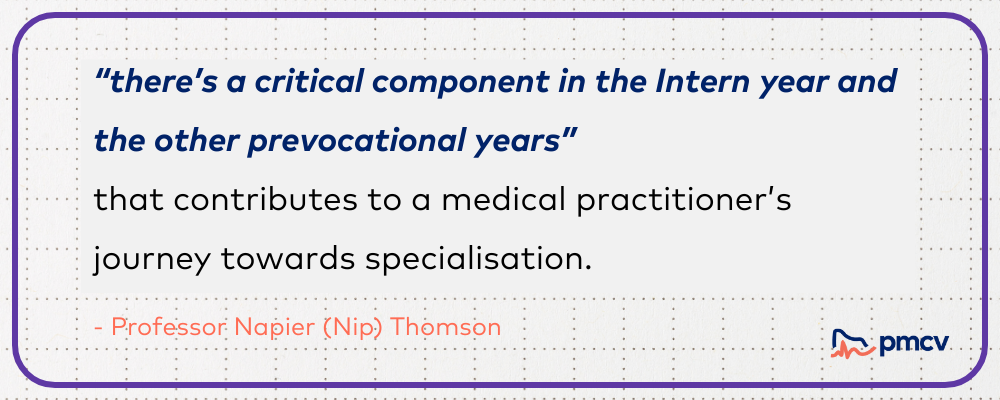
Professor Napier (Nip) Thomson who was the inaugural Chair of the PMCV Board, reflected that prior to PMCV’s founding in 1999 there was a consensus that “the most important thing was having… structured prevocational training which was absent before that time”.
The CEO of Health Education Australia Limited (HEAL), Beverley Sutton provided insight to what it was like at the time in her role as the Director of Medical Support Services at Northern Health. “There were no mechanisms in hospitals to hold anyone accountable for educational standards” during the first years of practice. In those days, “you could do almost anything – or nothing at all – with no consequences.” She shared that “we were striving to deliver education at a local level, but we were also acutely aware that some hospitals – particularly those in rural and remote areas – lacked the time and workforce capacity to support it.”
Once established, the “key thing that came out of PMCV [was] recognising that there needed to be training before vocational training under one of the colleges” Napier disclosed.
Subsequently, a process was created to ensure that this training fulfilled its purpose.
PMCV assumed responsibility for accrediting Victorian PGY1 (Intern) positions in 2000, succeeding the Intern Training Accreditation Committee (ITAC) of the Medical Practitioners Board of Victoria.
Former CEO of PMCV Carol Jordon shared that at the time “there’d been some work done with the Medical Practitioners Board about transitioning Accreditation from the Medical Board to the new council so that meant we had to develop the Accreditation Standards for Victoria.”
Dr Eleanor Flynn, who had been Chair of ITAC, became the inaugural Chair of the PMCV Accreditation Committee. She led the development of the Victorian Intern Accreditation standards. Eleanor also had a heavy role in drafting and trailblazing the accreditation standards for PGY2 positions. This process was voluntary at first, but eventually PMCV was required by the Department of Health to approve all PGY2 posts.
According to former PMCV Board Chair, Associate Professor Jonathan Knott, the Accreditation process requires a “great deal of volunteer support from a wide range of individuals.” PMCV demonstrated the knowledge required to determine whether prevocational doctor roles were safe and appropriate.
Its responsibilities as an Intern Training Authority became more defined after the Australian Medical Council (AMC) assumed national oversight of prevocational training and established national standards for interns, leading to the publication of the first National Framework for intern medical training in 2012. .
The Victorian accreditation process comprised regular surveys and reviews of each PGY1 and PGY2 training program and post to ensure that they met the national (intern) or Victorian (PGY2) standards. This process aimed, and continues to aim, to monitor and evaluate adherence to accreditation standards, including processes for the promotion of prevocational medical education and prevocational doctors’ wellbeing, and for ensuring safe quality patient care.
The role of PMCV Accreditation has undergone changes in focus as part of the revision of the National Framework which began implementation in 2022. The most significant change being mandatory accreditation of the PGY2 year. Broad generalist clinical experience is now required throughout the first two years of prevocational training. Napier detailed that broad generalist experience within prevocational training was first recommended nearly 30 years ago though a national report.
He also noted how important having this broader experience is, stating that “there is great strength in the Australian Medical School System of having a very broad curriculum and extending that breadth in that first one, two or maybe three years [of training], leading ultimately, in my opinion, to a much better physician, surgeon, ophthalmologist. They have a broader understanding of health and have a broader understanding of illnesses outside their own sphere of activity”.
The revision of the National Framework also called for an update in the Accreditation standards. Jonathan touched on the development process and that it was “set up through a review and then the AMC oversaw a process, but PMCV was actively involved at every step, particularly at this implementation stage.” Within the Framework there is also greater emphasis on the importance of prevocational training as an essential part of the training journey. Jonathan noted how much of a highlight this has been over the 25 years of PMCV.

When reflecting on PMCV’s role as a prevocational training authority, there was nothing but positives to share. Professor Michelle Leech, former Board Chair, outlined that “[PMCV] has sort of created a home or a place to go to for issues around junior doctor welfare, around issues of junior doctor safety on the job. I think the Accreditation aspect…has been incredibly powerful and the work that the PMCV has done around Accreditation and has been essentially as the delegated agency of the AMC. I think it has created some systems which probably wouldn’t have existed without the PMCV.”
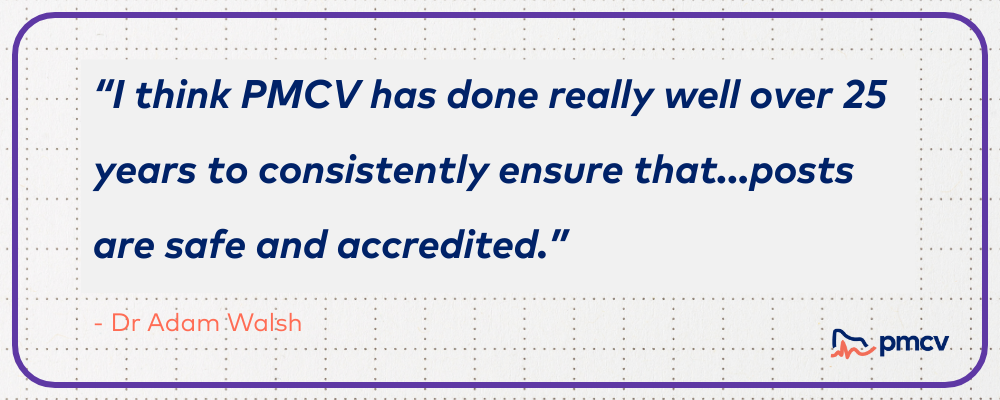
Dr Adam Walsh, Prevocational Representative on the PMCV Board and former Co-Chair of JMO Victoria continued this praise, “I think PMCV sets the standard in accrediting a multitude of different hospitals particularly when you consider that Victoria has many different health networks rather than a centralised model, that’s an incredibly hard job.
We are immensely proud of the strides we have made in this space as an organisation, supporting the development of safe, supported and thriving prevocational doctors. As we look to the future, PMCV will continue to ensure that all prevocational posts and programs in Victorian health services are accredited and meet national standards and will continue supporting the implementation of the National Framework as it eventually becomes embedded into everyday practice.
PMCV would like to thank Beverley Sutton, Professor Napier Thomson, Professor Brendan Crotty, Associate Professor Jonathan Knott, Professor Michelle Leech, and Dr Adam Walsh for their contributions to this newsletter.