The Australian Medical Council’s (AMC) standards for prevocational medical training informs how prevocational training programs across the country are structured, delivered and evaluated. These standards help to create safe and successful learning environments, resulting in better outcomes across the system for both patients and trainees.
These standards are regularly reviewed and updated by the AMC considering objectives, guiding principles, standards and procedures of both national and international sectors. The current standards were put into effect from 2024 with the updated National Framework for Prevocational Medical Training.
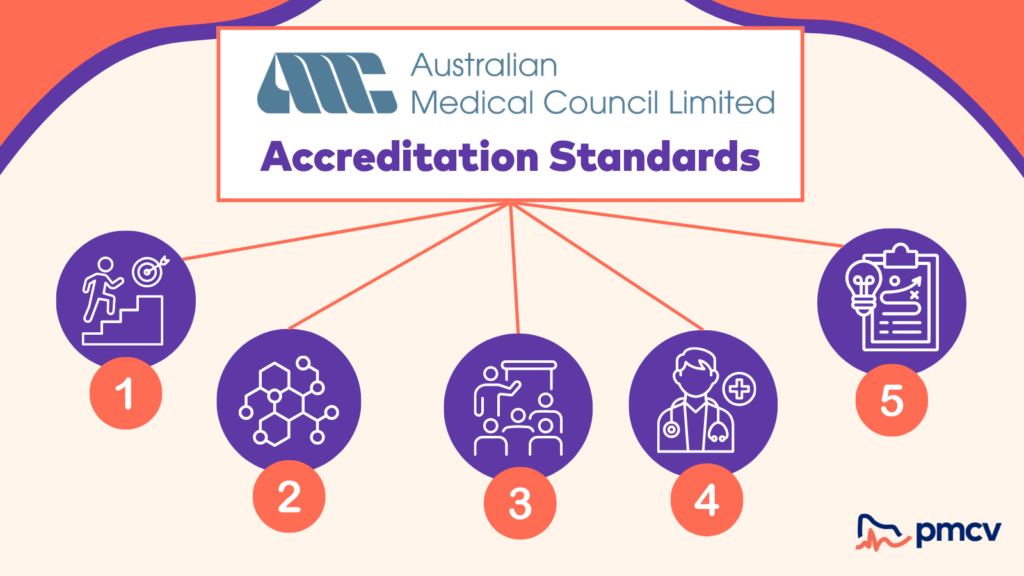
As a prevocational training accreditation authority, PMCV assesses health services and training programs against the national standards as part of our Accreditation process to ensure statewide consistency in prevocational doctor’s wellbeing and training quality.
Whilst all Victorian health services and training providers are aware of the standards, this newsletter aims to simplify and discuss the key themes of each standard, and what to consider to ensure that they are met.
Accreditation Standard 1 – Organisational purpose and the context in which prevocational training is delivered
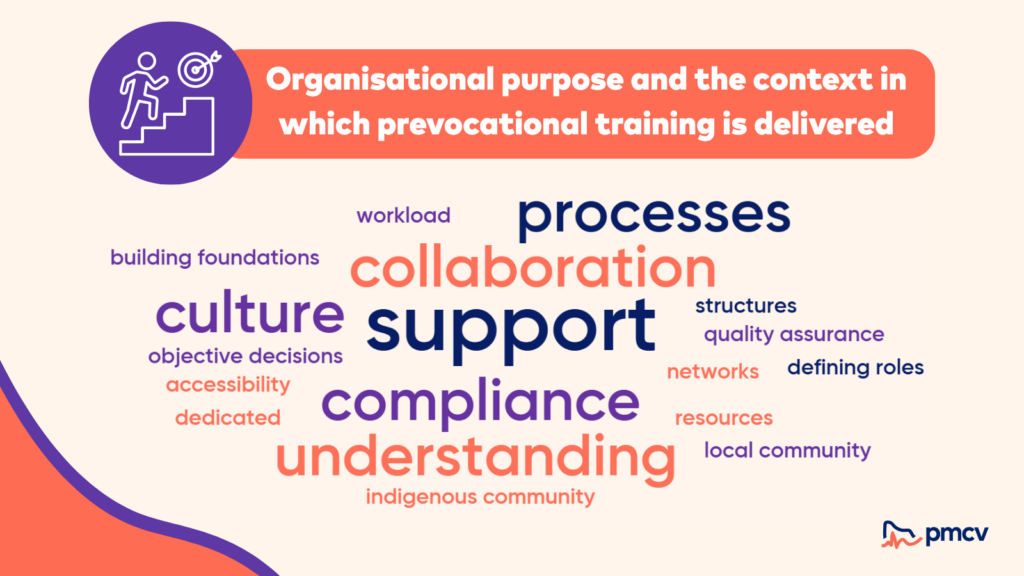
Standard 1 focuses on organisational purpose and how training programs are managed within the health service or training facility. This incorporates aspects of how the organisation is governed and how organisational structures support the development of prevocational doctors. It also includes how the health service understands and collaborates with its local community including Aboriginal and Torres Strait Islander communities.
Another key aspect of assessment for this standard is how relationships between medical education units and prevocational doctors are managed and maintained, ensuring that there is opportunity for collaboration, support and building networks between these groups and the wider health service.
When preparing evidence to support this standard, health services and training facilities should consider the following:
- Observing whether workloads and work arrangements are appropriate and align with the framework.
- Ensuring that the Medical Education Unit governance is strong and well-resourced to support training delivery.
- Ensuring that prevocational doctors are adequately supervised and that rostering practices reflect this.
Accreditation Standard 2 – Structure and content of the prevocational training program.
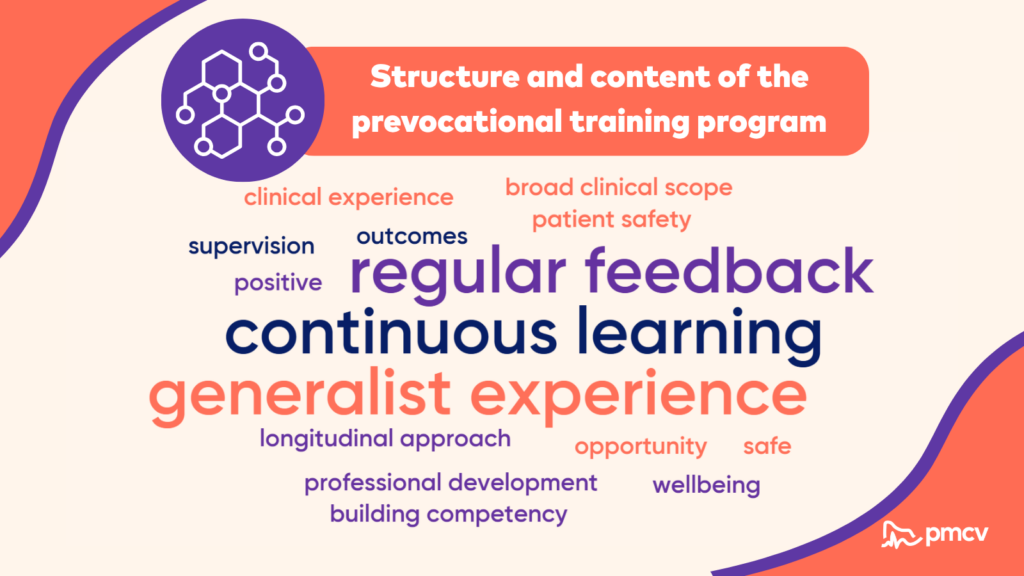
Standard 2 delves further into what is covered and prioritised within the prevocational training program. This integrates how the program exposes prevocational doctors to a range of clinical experiences and creates opportunities for professional development.
Another important aspect of this standard is how assessments promote longitudinal learning, as well as considering how regular feedback from supervisors is incorporated into the prevocational doctors’ daily work.
When gathering evidence in relation to this standard, organisations should consider:
- Ensuring that all mandatory training and required competencies are completed before commencing rotations.
- Looking at whether the clinical risk and setting of a rotation aligns with training requirements and is completed successfully.
- Making certain that compliance with safety-related requirements for education are consistent across all units.
Accreditation Standard 3 – Delivery of the prevocational training program.
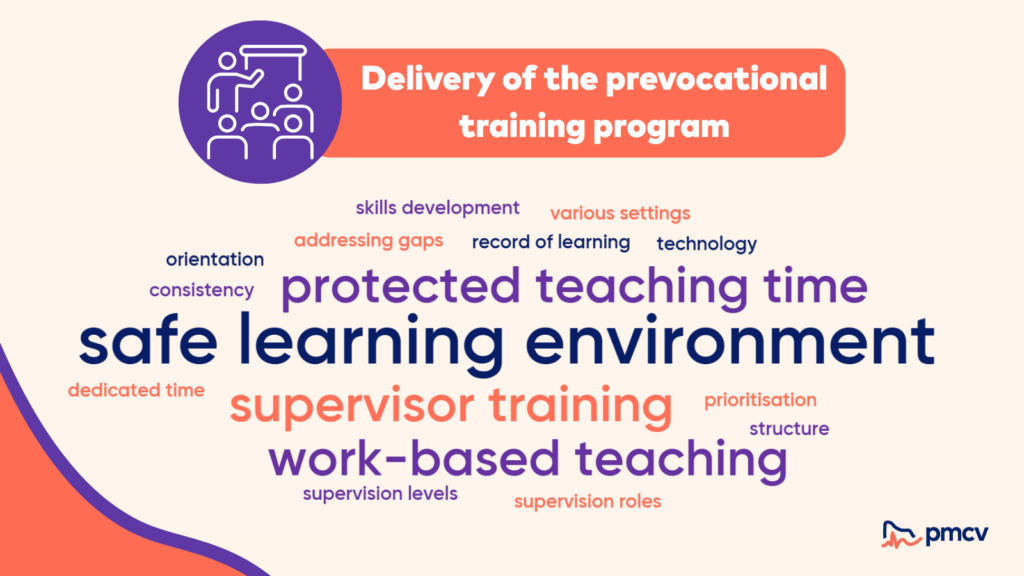
Standard 3 explores how the prevocational training program comes to fruition within the health service or training facility and considers how the organisation is creating a safe learning environment that allows for skill development across various settings. There is a strong emphasis on rostering practices and the workloads of prevocational doctors, as well as if there is a dedicated space for protected teaching time outside of clinical responsibilities.
Additionally, it covers having a strong understanding of the different levels and roles of supervisors, ensuring that appropriate training is offered to fulfill their roles effectively.
When addressing this standard, organisations should gather evidence of:
- Allowing dedicated time for learning and training opportunities in workload and rostering arrangements.
- Prioritising consistent access to education and protected teaching time for prevocational doctors.
- Addressing any gaps in orientation, feedback, and structured learning processes.
Accreditation Standard 4 – Prevocational doctors within the prevocational training program.
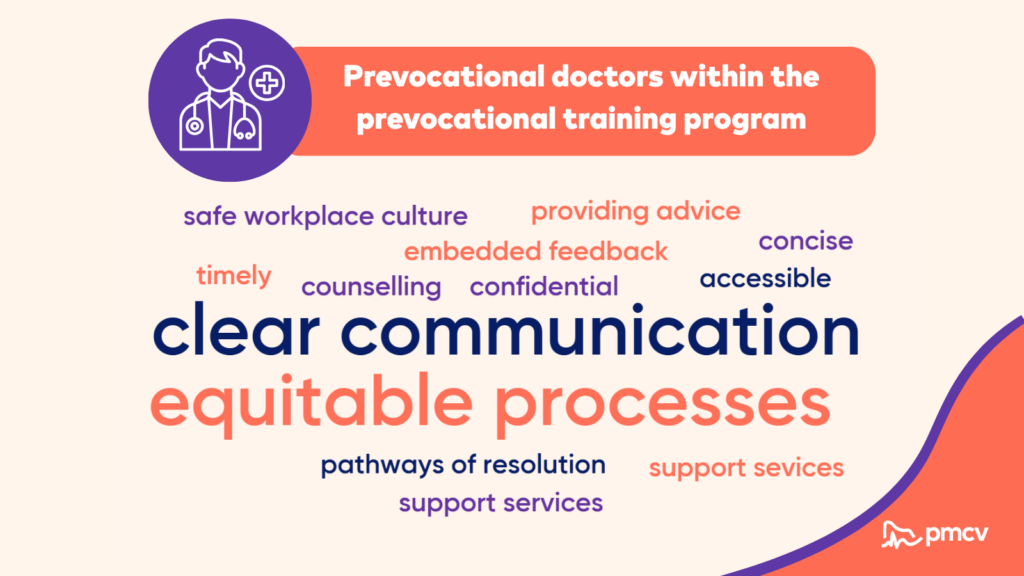
The fourth standard centers around attending to the needs of prevocational doctors and fostering a positive training journey for them. This begins with a clear, fair and transparent process of appointment to the training program, followed by consistent access to counselling and support services, including those for Aboriginal and Torres Strait Islander doctors.
It also includes robust processes to resolve conflicts that maintain confidentiality.
This standard requires organisations to demonstrate:
- Maintaining clear and consistent communication and escalation processes.
- Swiftly addressing workplace culture concerns that may impact feedback delivery and safety.
- Embedding assessment and feedback processes into practice.
Accreditation Standard 5 – Monitoring, evaluation and continuous improvement
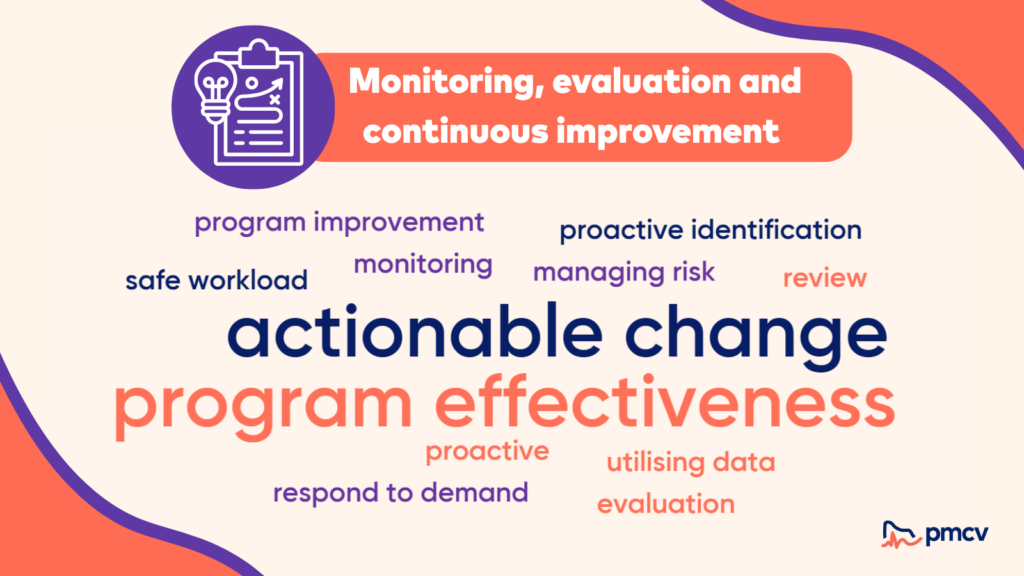
Standard 5 encapsulates how programs are monitored and evaluated to ensure that the program is continually improved upon . This includes how feedback is collected to monitor and evaluate program effectiveness, in addition to how this feedback is utilised to make actionable improvements to the program.
To substantiate this standard, it is worthwhile considering:
- Reviewing workforce and workload regularly to respond to demand.
- Using data and feedback received through evaluation to make actionable changes and improvements.
- Embedding systems such as monitoring to proactively identify and manage risks to training quality.
The AMC’s national standards cover several aspects of prevocational education and training, providing a framework to assess the quality of programs. Ensuring that all key areas are addressed allows training to be delivered to the highest quality and builds a solid foundation for the best possible future for every prevocational doctor.
If you would like to learn more about Accreditation processes, please visit our website: https://www.pmcv.com.au/accreditation/